How to Future Proof Your Website So It Lasts
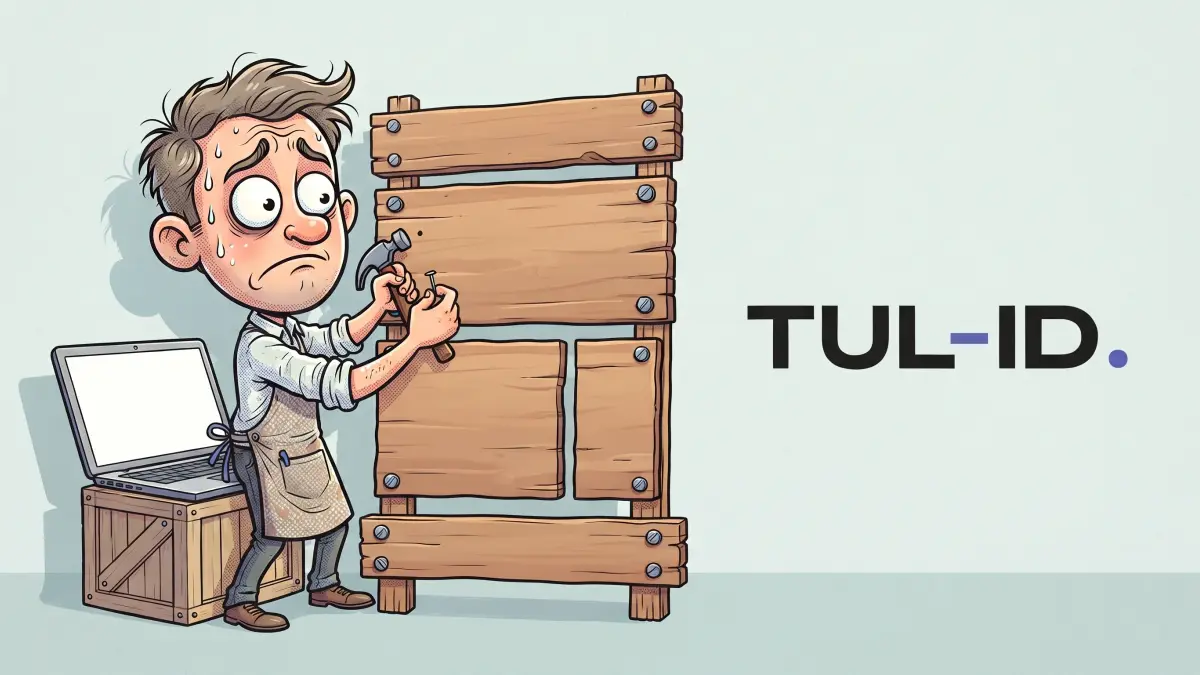
Most businesses don't plan for their website to fail. It just quietly stops working. A page that used to convert stops converting. A change that should take five minutes suddenly needs a developer. Nobody budgeted for the full rebuild that shows up three years later, but here it is. Knowing how to future proof your website is really about avoiding that day: choosing a foundation, a content structure, and a set of habits that let the site grow with the business instead of breaking every time it does.
What does it actually mean to future-proof a website?
It doesn't mean predicting the future. Nobody can guess which framework will be trendy in five years. It means building so that ordinary changes, a new service page, a booking form, a second location, a new integration, are additions instead of renovations. A future-proof site separates the parts that change often, content, layout, individual pages, from the parts that shouldn't need to change at all, like the underlying data structure and how pages get published. When those layers are cleanly split, growth is additive. When they're tangled together, every new request turns into a mini-rebuild.
Which tech stack choices tend to age well?
The technologies that hold up over time share one trait: they don't fight the web's own standards. Semantic HTML, CSS that degrades gracefully, and JavaScript that enhances rather than replaces core functionality all keep working even as browsers, devices, and frameworks change underneath them <a href="#sources" class="text-accent-soft no-underline">[1]</a>. Frameworks built on top of those standards, React-based tools like Next.js, for instance, tend to age well because they're widely adopted, well documented, and not owned by a single vendor who can change the rules overnight. The safest bet is popularity plus an open ecosystem: plenty of developers who can pick up the codebase, and no single company that can shut it down.
Which tech choices tend to cause a rebuild within a year or two?
Three patterns show up again and again: platforms with no real way to export your content, page builders that generate bloated, unmaintainable code under the hood, and one-off custom features nobody else can support once the original developer moves on. None of these are visible on launch day, the site looks fine. The trouble surfaces the first time you need to change something the platform wasn't built to handle, and by then there's usually two years of content locked inside it.
- You need a developer for text changes — even small copy edits require a code deployment instead of a simple edit inside the CMS.
- Content is trapped in a proprietary format — there's no clean export path if you ever want to switch platforms or agencies.
- One integration breaks another — adding a booking tool or CRM connection means untangling code that was never built to be extended.
- Nobody on your team understands the codebase — the original developer is long gone and nothing was documented.
- Every new page needs a new template — there's no reusable component system, so pages get built from scratch instead of assembled.
Is a website builder like Wix or Squarespace automatically a bad long-term choice?
Not automatically. For a simple brochure site with no growth plans, a builder can be perfectly fine. The risk shows up when the business outgrows it. Most all-in-one builders don't give you a real export path: your design, your CMS content, and your customer data are stored in a format that only works inside that platform <a href="#sources" class="text-accent-soft no-underline">[2]</a>. If a rebrand, a new sales channel, or a custom feature ever means moving off the platform, you're not migrating a website, you're rebuilding one from a written description of what the old one did. That's the real cost, and it rarely shows up in the monthly subscription price.
What is vendor lock-in, and how do I avoid it before signing a contract?
Vendor lock-in is what happens when switching away from a platform becomes so expensive or disruptive that you stay even after it stops serving you well. It rarely looks like a trap on day one. It shows up twelve to eighteen months in, once the platform is wired into how the whole business runs <a href="#sources" class="text-accent-soft no-underline">[3]</a>. Before committing to any platform, ask three questions: can I export my data in a standard format, can another developer pick up this codebase without starting over, and what happens to my site if this vendor gets acquired or drops a feature I depend on? If a sales rep can't answer those clearly, treat that as the answer.
What does "headless" or composable architecture mean, and do I actually need it?
A headless, or composable, setup separates where your content lives from how it's displayed. Instead of one monolithic system controlling everything, the content, the storefront, the booking engine, and the website front end are independent pieces connected through APIs, so you can swap one out without tearing down the rest <a href="#sources" class="text-accent-soft no-underline">[4]</a>. Do you need it on day one? Usually not, if you're a small business running a single site with a handful of pages. It starts to matter once you're publishing the same content across a website, an app, and a booking widget, or once you know you'll need to swap one piece, like moving from one booking system to another, without rebuilding everything around it.
How should content be structured so new pages don't require a rebuild?
Design and build in components, not pages. A well-structured site is really a small set of reusable pieces, hero sections, feature grids, testimonial blocks, forms, that get assembled into new pages as needed. Brad Frost's atomic design approach describes this well: most of a site's real complexity lives in a handful of content types and interface patterns, not in the page count <a href="#sources" class="text-accent-soft no-underline">[5]</a>. A forty-page site might really be three page templates and five content blocks, reused. When a new page shows up, a new location, a new service, a new case study, it's an assembly job, not a design project. That's the difference between a site that scales and one that needs a developer every time marketing wants to add a page. Start by checking that you already have the pages every small business website actually needs built as flexible templates, not static one-offs.
How do I plan for integrations I don't need yet, like booking or CRM tools?
You don't need to build every integration on day one, you need to leave room for it. That means choosing a platform with open APIs, keeping customer and content data in structured, exportable formats, and avoiding custom code that hard-codes assumptions about your current tools. A site built this way can pick up a booking system, a CRM, or a client portal later as a plug-in, not a rebuild. The businesses that get stuck are the ones whose site was built assuming nothing would ever be added to it.
Does site speed affect how long a website lasts before it needs replacing?
Yes, and it's one of the more overlooked reasons a site starts to feel outdated. Google treats page experience, loading speed, interactivity, and visual stability, as core signals of quality, and frames optimizing for them as a long-term investment in a site's success rather than a one-time fix <a href="#sources" class="text-accent-soft no-underline">[6]</a>. A slow site doesn't just rank worse, it trains visitors to bounce before they see what you built. If your site's speed is already costing you customers, that's usually a sign the underlying build, bloated plugins, unoptimized images, too many third-party scripts, needs attention well before a full redesign does.
How much does ongoing maintenance extend a website's lifespan?
More than most owners expect. Technical debt, the small shortcuts and deferred fixes that pile up over time, is estimated to cost businesses well over a trillion dollars a year in lost productivity and slowed-down teams, and websites aren't exempt from that math <a href="#sources" class="text-accent-soft no-underline">[7]</a>. A site that gets regular attention, security patches, plugin updates, broken-link checks, performance tune-ups, rarely needs a full rebuild. It needs periodic redesigns of individual sections as the business changes. A site that's ignored for three years accumulates enough small problems that a rebuild starts to look cheaper than untangling them. Regular maintenance is the cheapest future-proofing tool available, and it's the one most businesses skip.
How often does a genuinely well-built website actually need a full redesign?
Less often than the industry average suggests. Surveys and agency estimates cluster around every two to three years, but that number mostly describes sites that weren't built to last, not a hard rule <a href="#sources" class="text-accent-soft no-underline">[8]</a>. A well-built, well-maintained site can run five years or more on its original foundation, refreshing the visual layer and adding sections without touching the underlying architecture. The honest signal isn't a calendar date, it's whether you're still bolting things onto the wrong structure, or genuinely outgrowing what the business needs the site to do.
What should I ask a developer before the build starts, to make sure it holds up?
Ask what happens if you ever want to leave: can you export your content, who owns the code, and does the platform lock you into one host or vendor. Ask how new pages get built: is there a reusable component system, or does every page start from scratch. Ask what's already accounted for as you grow: can the site handle a booking system, a CRM, or a second brand without a rewrite. These are covered in more depth in what to sort out before your first call with a web developer, and the answers matter more than the price quote.
Is it worth paying more upfront for a future-proof build?
Usually, yes, but not because a bigger number automatically means a better build. It's worth paying for a properly structured website build because the alternative isn't a cheaper site, it's the same spend plus a rebuild in eighteen months. If budget is the real constraint, compare what a well-structured build actually costs against what you'd otherwise pay twice, once now and once when the shortcuts catch up with you. Either way, that's a conversation worth having before the first line of code gets written. Reach out and walk through what your site actually needs to grow into.
A future-proof website isn't a bigger budget or a fancier framework, it's a handful of decisions made early: standards-based tech, modular content, exportable data, and a maintenance habit. Get those right and a redesign becomes a choice you make when the business changes, not a scramble you're forced into when the site breaks.
Sources & references
- Progressive enhancement — MDN Web Docs Glossary.
- Do You Actually Own Your Website? Here's How To Tell — DreamHost.
- Vendor Lock-In: The Biggest Risk You're Not Considering in Your Website Build — Workhorse.
- The Role of the MACH Alliance in the Rise of Composable Technologies — Hygraph.
- Atomic Design, Chapter 1: Designing Systems — Brad Frost.
- Web Vitals — web.dev (Google).
- The Real Cost of Technical Debt (and When It's Worth Paying) — Full Scale.
- Why Companies Redesign Websites Every Three Years (Or Do They?) — Walker Sands.
Sources reflect published guidance and industry data at the time of writing; platforms, pricing, and best practices change, so confirm specifics with a developer before making build decisions.
Building something that needs to last? Let's talk about a website built to grow with your business, not against it.
Talk to us arrow_right_alt