How much does a small business website cost — DIY, freelancer, or agency?
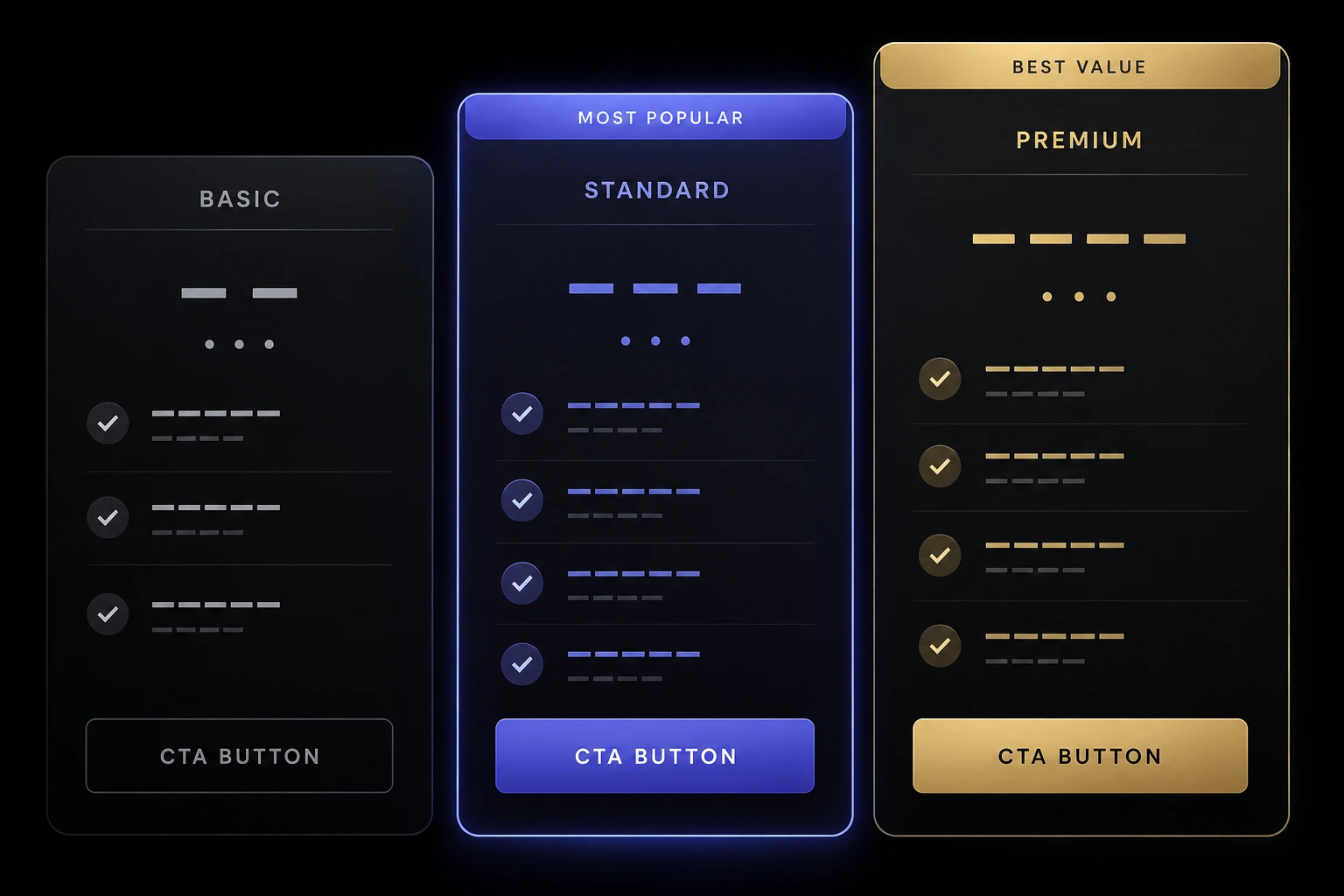
Ask ten owners how much does a small business website cost and you will get ten numbers that all feel true and none of which help you budget. A DIY builder can be live for the price of a streaming subscription. A freelancer can ship a clean brochure site for a few thousand dollars. An agency can quote five figures before they have seen your content. The useful question is not the lowest number. It is which kind of site you are actually buying, and which extras — pages, integrations, copy, photos, checkout — are doing the real work on the quote.
How much does a DIY website builder actually cost?
If you mean a hosted template on Wix, Squarespace, or a similar builder, the sticker price is a monthly plan, not a project. Wix’s paid site plans start in the teens of US dollars per month and climb as you add a custom domain, remove ads, and unlock commerce features [4]. Squarespace’s site and commerce plans sit in a similar band, billed monthly or cheaper by the year [5]. Add a domain (usually around the price of a couple of coffees per year) and a stock-photo or logo tool if you do not already have assets.
That is the honest DIY total: a few hundred dollars a year to keep the lights on, plus your evenings. It is a real website. It is also a website you will design, write, connect, and debug yourself. Industry roundups that try to give a single “average” still put the builder path at the bottom of the stack, because you are paying for software access, not for someone else’s weeks [1] [2].
What should I expect to pay a freelancer?
A competent independent designer or developer in the US or Australia will usually quote a project, not a monthly “website” fee. Marketplace and agency surveys still cluster a simple brochure or small-business marketing site in the low thousands of dollars, with custom work climbing from there [1] [7]. Clutch’s public web-design pricing pages show how wide the hourly band is — junior generalists and senior specialists are not the same product, even when both say “WordPress” [3].
- Simple brochure. A handful of pages, your photos, a contact form. Often a few thousand dollars if the scope stays still [1] [7].
- Custom look with light function. Unique layout, a booking widget, a blog, or a small catalog. This is where quotes jump because the work is no longer theme-picking [3] [12].
- You as project manager. A freelancer is one person. Content delays, extra pages, and “can we also…” emails are how a tidy quote becomes a second invoice.
Treat the low end as a starting number only if you already have copy, images, and a short page list. If you need them to invent the brand while they build, you are buying a studio project whether or not you hired one person. Our recent work is the kind of finished site people mean when they say “professional,” and that finish is mostly decisions, not plugins.
What does an agency-built website cost compared with those two?
Agencies charge for a team: strategy, design, build, QA, and someone whose job is to keep the scope from melting. Public cost guides for custom and agency sites routinely put serious marketing sites in the five-figure range, with more complex builds well above that [1] [12]. Forbes Advisor’s overview is the same story in plainer language: template and DIY sit at one end, custom development at the other, and “average” is a blur of both [2].
You are not paying 10x for prettier buttons. You are paying so that information architecture, mobile layout, forms, analytics, and launch are one conversation instead of four contractors who have never met. If you want a studio to own website development end to end, compare that quote to the freelancer-plus-you-on-weekends version, not to a $29 theme. TUL-ID’s own starting packages live on the pricing page — they are a floor for a defined scope, not a menu of fake discounts.
Why can two quotes for the same brief be so far apart?
Because the brief is almost never the same once you unpack it. One vendor hears “five pages” and uses a theme. Another hears “five pages” and budgets original layout, custom components, and a week of content workshops. Clutch-style rate tables exist because seniority, location, and whether the vendor includes strategy all move the number before anyone opens Figma [3]. Design marketplaces that publish agency bands show the same spread: a marketing site and a productized web app are not cousins [12].
- Page count is a trap. A 12-page site with one layout is cheaper than a 4-page site with four unique templates, booking, and a CMS the intern can edit.
- Integrations hide in the last paragraph. Mail tools, calendars, CRMs, and payment providers are where “simple site” quotes go to die.
- Who writes the words. If the quote assumes you deliver final copy on Tuesday, and you will not, the schedule and the cost are both fiction.
Does an online store cost more than a brochure site?
Yes, almost always. A brochure site argues. A store takes money, tracks stock, calculates shipping, and has to fail gracefully when a card is declined. Shopify’s published plans start in the tens of dollars per month for the platform itself, before theme work, apps, and a developer’s time [6]. Shopify’s own cost guide is blunt that the subscription is the cheap line item next to theme customization, apps, and photography [11].
Industry cost articles put e-commerce well above a static marketing site for the same reason: more states, more testing, more ways to lose an order [1] [2]. If you only need a catalog and a “contact us to buy” button, say that out loud. A full checkout is a different product. That is web development services with commerce in the middle, not a brochure with a cart icon taped on.
What ongoing costs sit on top of the build?
Launch is not the last invoice. Budget for hosting or a platform plan, a domain, email that does not live on a free Gmail forever, and someone to patch the thing. Builder and commerce platforms bill monthly by design [4] [5] [6]. Custom sites still need hosting, SSL, backups, and updates — the work described in a website maintenance retainer, whether you buy it or do it at midnight.
- Platform or hosting. Tens of dollars a month on a builder or Shopify plan; custom stacks vary with traffic and who manages the server [4] [6].
- Apps and add-ons. Reviews, subscriptions, extra shipping rules. Each one is a quiet subscription until you audit them.
- Content and ads. The site does not write next month’s offer. If the business depends on the site, the site needs a content habit, not a one-off launch.
Will a cheap website cost me more later?
It can, in boring ways. A theme that is slow on a phone is not a “nice to have” problem. Google’s page-experience guidance still treats loading, stability, and interactivity as part of how Search understands a page [8]. HTTP Archive’s Web Almanac keeps showing that real pages are heavy — images and third-party scripts are where weight (and patience) go [9]. Nielsen Norman Group’s usability basics have not expired either: if people cannot find the next step, they leave [10].
The expensive cheap site is the one you replace in 14 months because nobody can edit it, it fails Core Web Vitals, or it cannot grow into booking or checkout. That replacement is a second project. A redesign is cheaper when you planned for change, not when the old site is a hostage.
How do I read a quote without getting snowed?
Ask what is included in hours, not in adjectives. “Responsive,” “SEO,” and “modern” are not line items. A usable quote names pages, unique templates, integrations, rounds of revision, who supplies copy, and what happens after launch. Cost guides that publish ranges only help once you map your scope onto a band — DIY, freelancer, or agency — instead of shopping the lowest screenshot [1] [2] [12].
- Deliverables. Page list, CMS, forms, redirects, analytics, and staging URL. If it is not written, it is optional in their head.
- What you owe them. Brand files, copy dates, photo rights. Late content is the most common reason a cheap quote still overruns.
- The after. Training, a handover doc, and a maintenance path. A site you cannot update is a rental, not an asset.
Should copy, photos, and SEO be in the same budget as the build?
If you want the site to work, yes — or at least name them as separate lines so they do not vanish. Search still cares that the page is usable and that the content matches the query [8]. A beautiful empty template loses to a plain page that answers the question. Stock photos of handshakes do not count as a brand. A practical small business website checklist is mostly content and proof, not extra JavaScript.
Freelancer quotes that look cheap often assume you are the copywriter and the photographer. Agency quotes that look expensive often include workshops, information architecture, and a pass of on-page SEO. Neither is dishonest. Mixing them in your spreadsheet is. Usability research is unromantic here: people scan, they look for the next action, and they bounce when the page makes them think too hard [10].
When is a custom site worth more than a template?
When the site is part of how you operate, not a digital brochure you update twice a year. Booking that has to match real staff calendars, catalogs with awkward variants, client logins, or a checkout that has to talk to software you already run — those are product problems. Template math (monthly platform plus a theme) is the right math for a straightforward marketing site [4] [5]. Custom math is the right math when a theme would need to be fought into shape every month.
E-commerce is the usual fork. If you are selling a real catalog, a mature platform subscription plus skilled theme work is often faster than inventing a cart [6] [11]. If you are selling a service with deposits, memberships, or a configurator, you are in custom territory even if the homepage looks simple. That is a scope conversation with a studio, which is what contact is for — not a theme demo with the price blurred out.
How should I pick a number I will not regret?
Pick the band that matches the job for the next two years, not the number that feels virtuous this week. DIY is correct if you will live in the editor and the business can survive an amateur layout. A freelancer is correct if the scope is short and you will actually send content on time. An agency is correct if the site has to look like a company and keep working when you are busy. Public ranges from WebFX, Forbes Advisor, Clutch, and agency marketplaces are there so you can sanity-check a quote, not so you can average them into a fake precision [1] [2] [3] [12].
Then add the unglamorous line: hosting or platform, maintenance, and one round of improvement after you see real users. Page weight and page experience are not designer hobbies [8] [9]. If you want a number tied to a real scope instead of a blog range, that is a conversation — bring the page list, the must-have integrations, and who will write the words.
Sources & references
- WebFX — How Much Should a Website Cost?.
- Forbes Advisor — How Much Does a Website Cost?.
- Clutch — Web Designers Pricing.
- Wix — Website plans and pricing.
- Squarespace — Pricing.
- Shopify — Pricing.
- Upwork — How much does a website cost?.
- Google Search Central — Understanding page experience in Google Search results.
- HTTP Archive Web Almanac 2024 — Page Weight.
- Nielsen Norman Group — Usability 101: Introduction to Usability.
- Shopify — How much does an ecommerce website cost?.
- DesignRush — Website Development Costs.
Figures and pricing may change after publication; verify with the source before relying on them.
Want a real number for your scope?
Talk to us arrow_right_alt